By Fatih Gürbüz (instagram: @ffgurbuz)
The Eiger Ultra Trail — A Short Introduction
The Eiger Ultra Trail is one of Europe’s most respected mountain ultramarathons, held each July in the Swiss village of Grindelwald beneath the legendary Eiger North Face. Since its first edition in 2013, the race has grown into a cornerstone of the UTMB World Series, drawing runners from around the world onto ancient alpine paths shaped by glaciers and centuries of mountain life.
The event honors the region’s mountaineering heritage — decades of climbers coming to face the Eiger’s infamous Nordwand, a wall known for both triumph and tragedy. The E250, the race’s longest and most demanding distance, carries that same spirit into running: unpredictable weather, steep technical terrain, and long stretches where the mountain decides the rules. Every edition becomes its own story, shaped by that year’s conditions.
This is my story.
Race Report & Lessons Learned
“The mountains don’t care how much you trained. They only care how well you adapt.”
Part I — Returning to Eiger
Some races stay with you long after you’ve left the mountains. The Eiger E250 was one of them.
In 2023, my teammate Shaun and I came within 30 kilometers of the finish before our race ended. At kilometer 220, a knee injury forced Shaun to stop. Although he encouraged me to continue, I chose to stay with him. For us, TurkAus — our two-man team name — had never been about individual success. We started together, and we would finish together, or not at all.
Walking away from Grindelwald that year was painful. Months of preparation, and we left empty-handed. But I never considered it a failure. The mountain had simply postponed our story.
Over the next three years, I built endurance through races like KAT100, Iznik Ultra, Uludag Ultra and Chianti Ultra, and countless long runs in Aydos Forest — every session aimed at one goal: return to Eiger stronger, wiser, better prepared.
By July 2026, everything was ready. Or so I thought.
Picture – 1: Team TurkAus
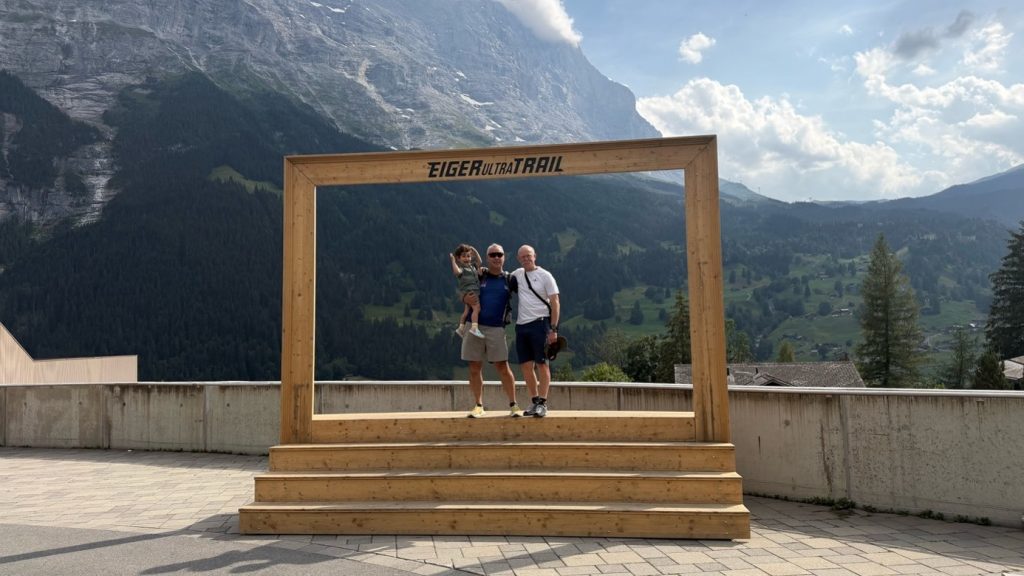
The Mountain Makes the First Decision
The weather had been unstable for days. Heavy rainfall across the Bernese Alps forced the organizers into the hardest decision they could make: safety first.
On the morning of 15 July, my phone filled with notifications. The original E250 had been cancelled. Instead, the race would begin at 3 a.m. on 16th from Kandersteg, on a completely revised course:
205 kilometers. 10,645 meters of climbing.
Months of planning disappeared in a single message. That afternoon we traveled to Kandersteg, where hundreds of runners sat quietly in the sports centre, repacking bags, recalculating nutrition, rewriting strategies. Nobody complained. Nobody blamed the organizers. Everyone understood the same truth: nature always has the final say.
Picture -2: Kandersteg:
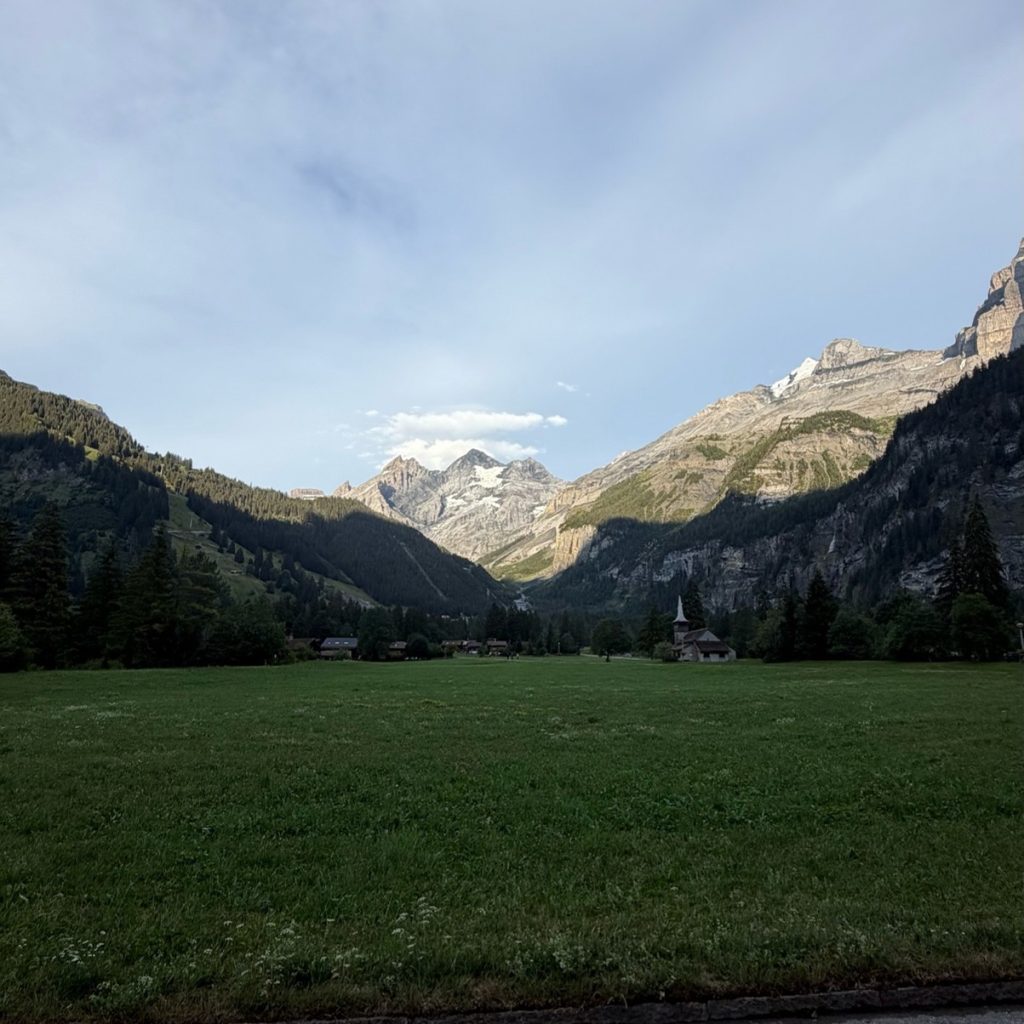
A Different Race Begins
Sleep proved almost impossible — not from nerves, but because the race I’d imagined for months no longer existed. At 2:00 a.m., headlamps lit the sports centre. At exactly 3:00 a.m., we started climbing toward Lötschenpass.
The objective was simple: move steadily, eat consistently, protect our legs. The opening hours of a 200-kilometer race reward patience, not ambition. Your headlamp reduces the world to a few meters of trail; instead of thinking about mountains, you focus only on the next step.
Along the climb we met two Americans from Minnesota — Kyle and Joey. At the time, they were simply friendly runners sharing our pace. Neither of us knew our paths would soon become inseparable.
Part II — When Your Race Changes Teams
Leaving Lötschenpass, everything still felt comfortable. The weather improved, our pacing was conservative, and Shaun and I settled into rhythm — naturally staying close to Kyle and Joey, sometimes ahead, sometimes behind. Like many ultra-running friendships, ours began simply because we happened to cover the same kilometers.
Small Problems Become Big Problems
Managing diabetes had always been part of Shaun’s race planning. When his insulin pump failed, we replaced it with a spare, and everything seemed normal. Looking back, I realize major problems rarely arrive dramatically. They begin quietly.
Soon Shaun became unusually quiet. His pace slowed. Then he stopped.
“My knee.”
The words took me straight back to Eiger 2023. After several silent minutes, he looked at me. “This time… I want you to continue.” Those words were harder to hear than I expected.
Picture – 3: Shaun changing insulin pump
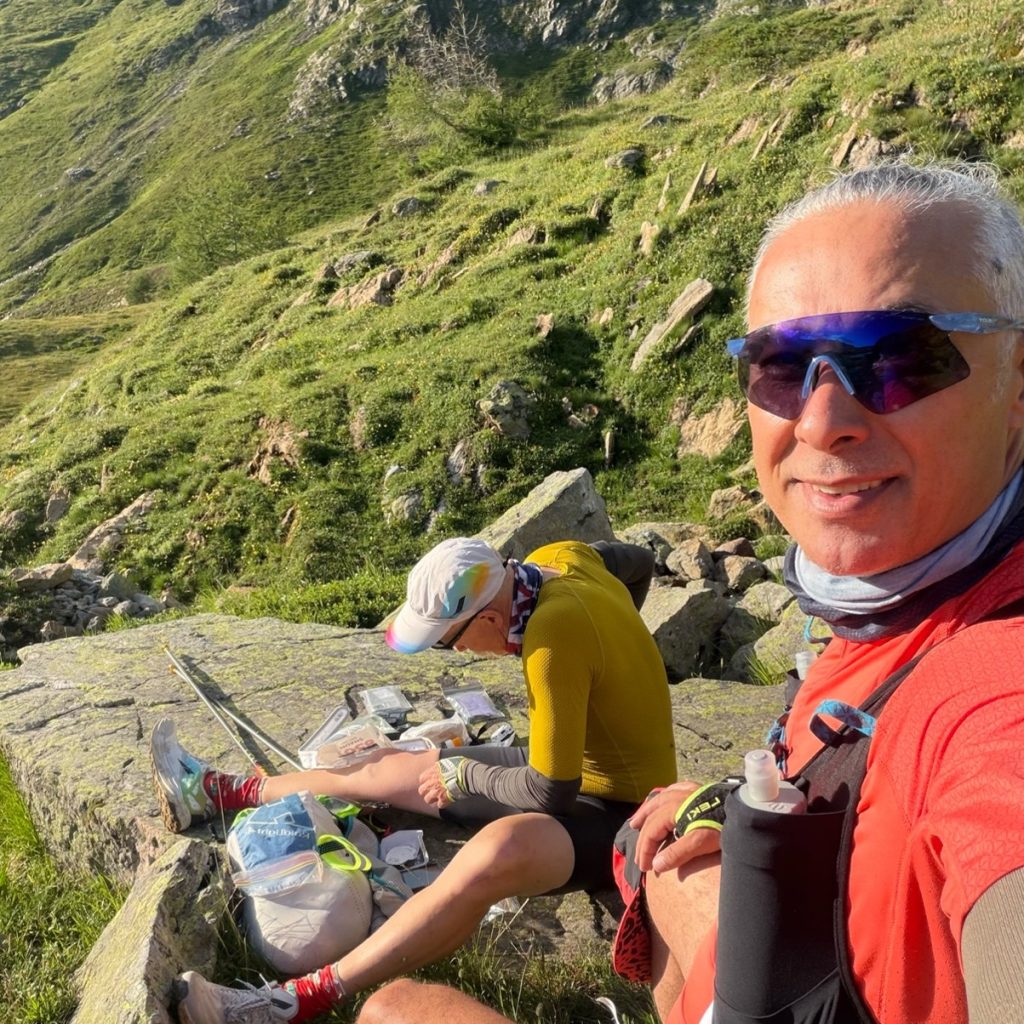
Never Decide on the Mountain
I refused to decide immediately. “We’ll decide at Jeizinen.” Fatigue makes poor decisions feel reasonable. Aid stations provide food, warmth, medical support, perspective — important decisions belong there, not halfway up a mountain.
A New Team
At Jeizinen I walked over to Kyle and Joey. “My teammate has injured his knee. If he stops… would you take me into your team?”
They looked at each other. Kyle spoke first: “We’re okay with it.” Joey smiled. “Can you hold our pace?”
“My pace doesn’t matter anymore,” I said. “Your team. Your pace. Your rules.”
Seconds later, I had a new team.
Leadership Sometimes Means Letting Go
Walking back to Shaun remains one of the hardest moments of my running life. He already knew the answer.
“I’ll bring the Eiger stone home. For TurkAus.” He smiled. “Go finish.”
I wasn’t abandoning him — I was carrying his dream with me. Sometimes leadership isn’t staying beside someone. Sometimes it’s giving someone permission to continue.
Picture – 4: Team PalmButt
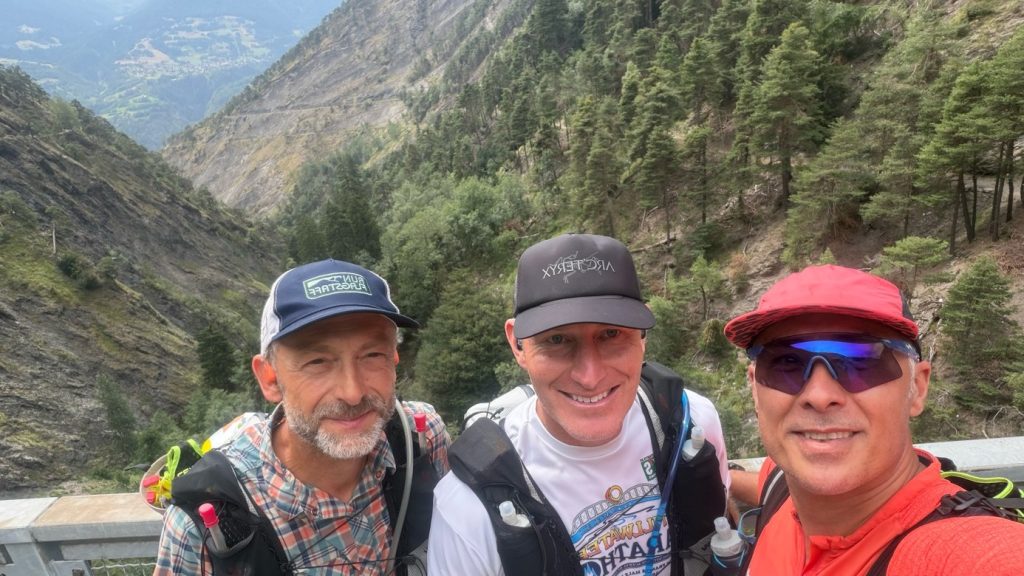
Part III — When Three Strangers Became One Team
Until Jeizinen, I was running the race I’d trained for. After Jeizinen, I was running a completely different race — not because of the course, but because of the people.
A few minutes later I stood in front of Kyle and Joey — two runners who, until that morning, had simply been friendly faces on the trail. Trust began quietly, built through humility and shared suffering.
The first kilometers together felt like a first date. Nobody wanted to impose or slow the others down. Everyone was quietly observing: How often does he drink? Does he push climbs? Can he descend? Does he complain? Can he laugh while suffering? Ultra-running reveals personalities quite fast — after thirty hours without sleep, masks disappear. Only character remains.
Conversation developed naturally: work, family, failures, dreams. Somewhere during those climbs, nationalities disappeared. There were no Americans, no Turks — only three runners solving the same problem: how do we keep moving forward?
By Finnen, around sixty kilometers in, trust had begun forming. The checkpoint was unforgettable — cowbells, music, children shouting, volunteers applauding every runner with the same enthusiasm, first or last. We slept for thirty minutes. In a mountain ultra, half an hour feels like borrowing energy from tomorrow.
The next stretch to Belalp — only fifteen kilometers — took nearly six hours. That sentence explains mountain ultra-running perfectly: distance means almost nothing, elevation dictates everything.
This was also when our differences became obvious. I carried about a liter and a half of water between stations; Kyle and Joey often carried three. They thought I was crazy. I thought they were carrying unnecessary weight. Neither of us tried to convince the other — different experience, different solutions. One of my favorite lessons from Eiger: there are many correct ways to solve the same problem.
We also started stopping at every mountain café — sparkling water, ice cream, sometimes coffee. Those little stops became emotional reset buttons more than nutritional ones. For twenty minutes we stopped being ultra-runners and became three friends enjoying the Alps.
Picture – 5: On the way to Belalp
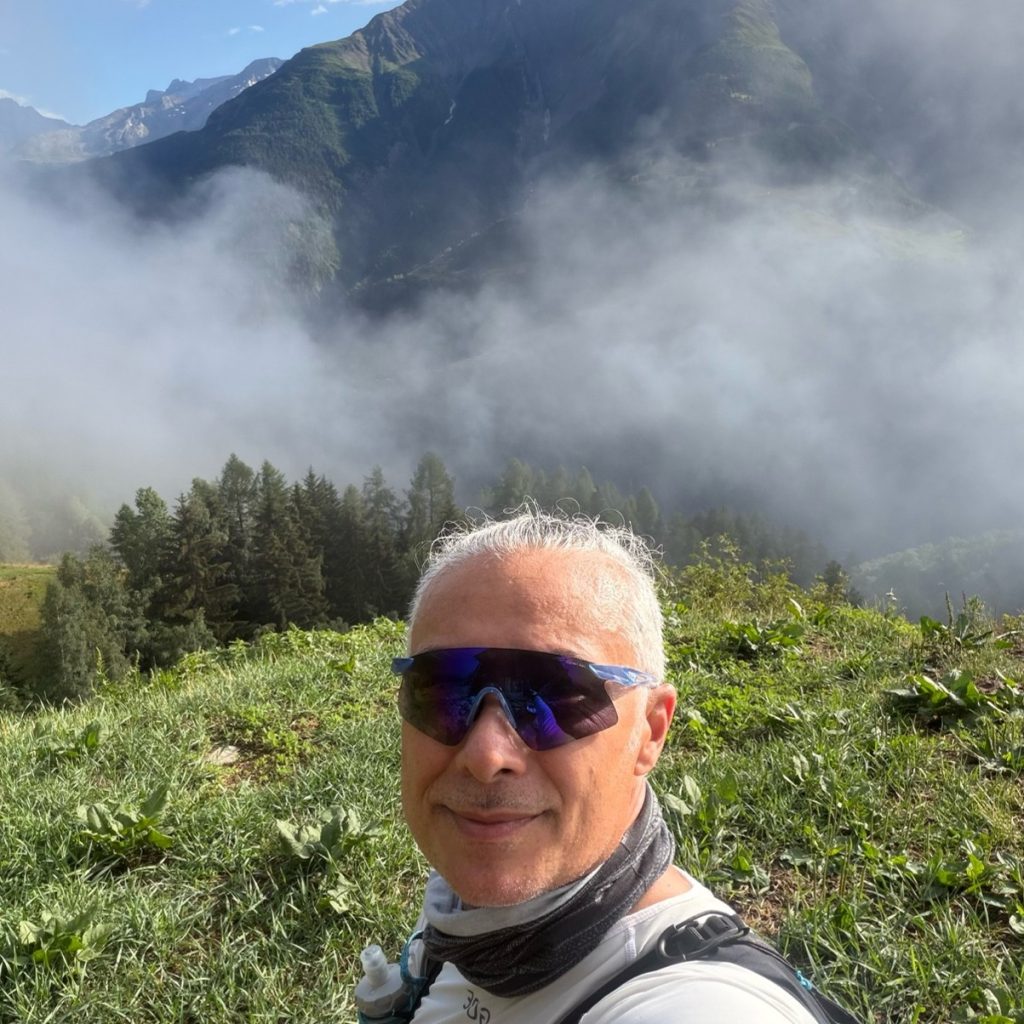
Belalp — Where Recovery Becomes Strategy
Belalp welcomed us close to midnight: pizza, hot food, showers, beds, non-alcoholic beer. After more than seventy kilometers, it felt surreal. We made a critical decision — rest properly, several hours. Not glamorous, not heroic. Just smart. Recovery is also progress; many runners lose races because they refuse to recover.
When we left Belalp around 4:00 a.m., nobody talked about finishing, kilometers, or time. We simply shouldered our packs and started walking. Without realizing it, three strangers had quietly become a team — and for the first time since leaving Shaun, I no longer felt alone.
Part IV — Belwald: Where Eiger Asks the Real Questions
Every ultramarathon has a point where the real race begins — not at the start line, but when excitement fades, fatigue settles, and the finish still feels impossibly far. For us, that moment came leaving Belalp.
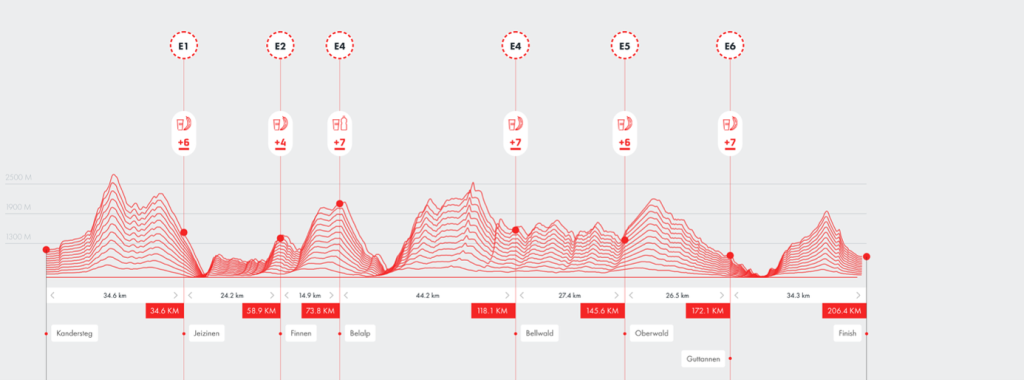
Among Eiger runners, Belwald has a reputation — not for altitude or technicality, but because it quietly destroys expectations. By the time you arrive, you’ve covered nearly 120 kilometers and climbed more than 7,300 meters — roughly three-quarters of the total elevation gain — yet almost ninety kilometers still remain. Your body starts asking difficult questions; your mind starts suggesting easier answers.
The descent through wet forest demanded full concentration — rain had polished every rock and root, and we were negotiating with the mountain rather than running it. Kyle led confidently, Joey followed smoothly, and I focused on rhythm. Our objective wasn’t speed anymore. It was consistency.
Sunrise revealed glowing peaks and lifting clouds — the kind of moment that explains why people willingly return to the mountains despite the suffering. But beauty rarely lasts. Within hours the temperature rose dramatically, the climbs steepened, and our hydration vanished faster than expected. The revised course had removed kilometers; it hadn’t made Eiger any easier.
Pain became another member of our team — legs, feet, shoulders, all complaining. Nobody talked about it. Pain is part of the entry fee in ultra-running.
Suffering, though, has a side effect: it creates honesty. Somewhere on those endless climbs our conversation drifted to family, childhood, the dreams that had brought each of us to Switzerland. Some of those conversations will stay on that mountain forever, and perhaps that’s exactly where they belong.
After nearly fourteen hours of continuous effort, Belwald finally appeared. Only forty-four kilometers separated it from Belalp — on paper straightforward, on the mountain endless. You round one corner expecting to arrive; another climb appears. The mountain doesn’t defeat your legs. It negotiates with your mind.
The volunteers there welcomed every runner like family, asking only whether we needed anything. Dry clothes, showers, real food, then the greatest luxury an ultrarunner can imagine: thirty minutes of sleep.
Sleep, however, had become my weakness. Since leaving Kandersteg I’d accumulated barely ninety minutes. I knew what prolonged deprivation could do — poor decisions, loss of concentration, hallucinations. The mountain treats everyone equally.
When we packed up again, our next destination was Oberwald — twenty-seven kilometers, 1,200 meters of climbing. For the first time since the race began, we realized we were now closer to the finish than the start. Nobody said it out loud. We just smiled.
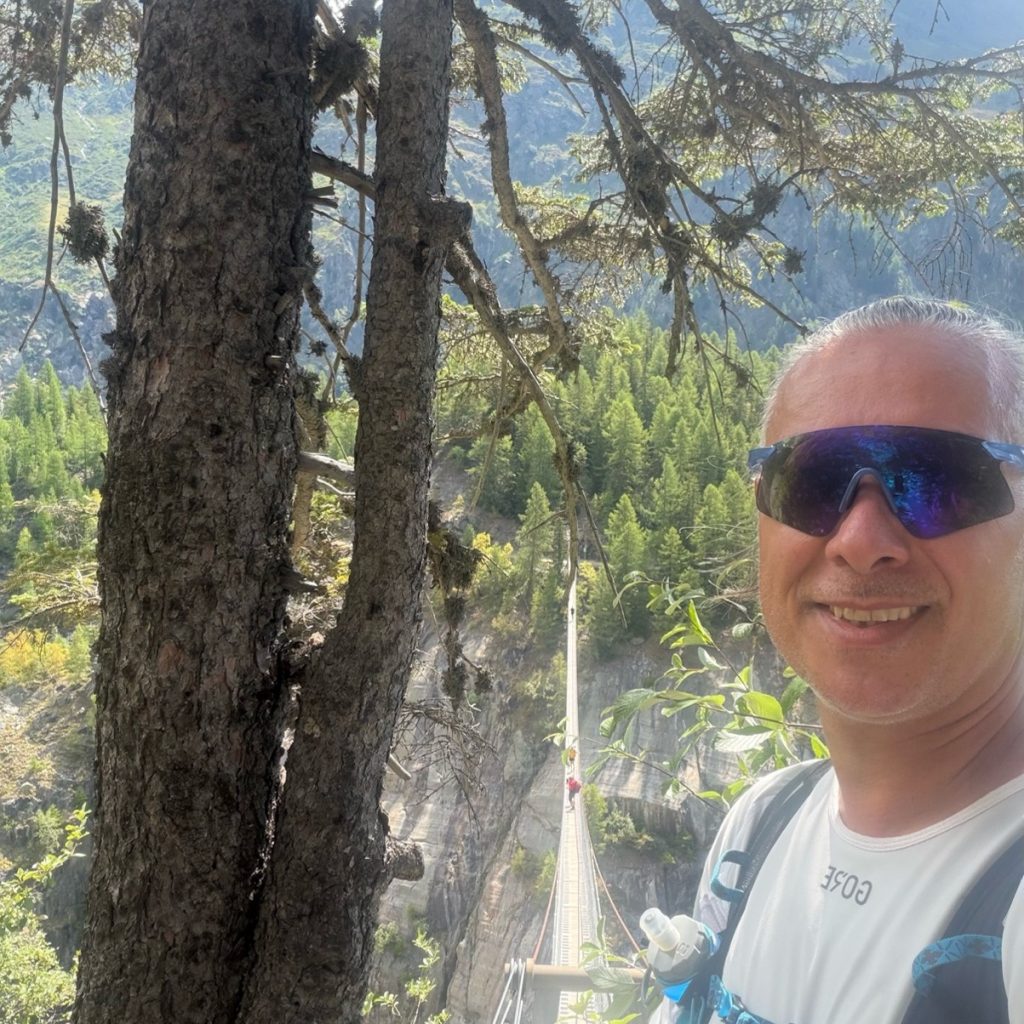
Picture – 6: Hanging Bridge
Lessons from the Mountain (So Far)
• The hardest part of an ultramarathon rarely appears on the elevation profile — it begins when your mind starts negotiating with your body.
• Recovery is not weakness; it is strategy.
• Teams become strongest when roles no longer need explaining.
• Hope doesn’t always return loudly — sometimes it arrives quietly, in the realization that you’re finally closer to the finish than the start.
Part V — The Expedition
Leaving Belwald felt different — not because our legs were fresher, but because for the first time since Jeizinen, we no longer felt like three runners trying to survive an ultramarathon. We felt like an expedition. Nobody questioned the next decision or worried about who would lead; everyone simply did what was needed. We no longer measured the race in kilometers. We measured it in life bases — one checkpoint, one decision, one mountain at a time.
The trail unfolded through forests into alpine valleys, cool air a welcome change after the previous day’s heat. Running felt enjoyable again — not easy, just enjoyable. We stopped often, not because we needed to, but because Switzerland demanded it. Crossing the suspension bridge, swaying above the valley with the river carving below, was unforgettable. Eiger wasn’t just taking us through the Alps — it was introducing us to them.
By Oberwald, our teamwork required no discussion — bottles filled, route checked, food prepared, all without a word.
We continued toward Grimselpass and Guttannen — a section I’d anticipated for months, not for its difficulty but its scenery. The original route climbs toward one of the race’s iconic glacier viewpoints. Unstable weather forced a reroute instead — the right call for safety, but disappointing. Some dreams have to wait. Near the tunnel that replaced it, we stopped at a small mountain restaurant for sausages — hot, salty, and unforgettable. Hunger is the greatest chef.
Dark clouds gathered again; rain turned steady. At Grimselpass we waited under shelter, watching sheets of rain sweep the reservoir. Sometimes the strongest decision in the mountains is not moving. When it eased, we continued — the landscape transformed, rocks darker, waterfalls stronger, streams crossing trails that had been dry hours before.
Nine and a half hours after leaving Oberwald, we reached Guttannen. My feet needed medical attention — blisters drained, skin cleaned, dressed and sent back out. The pain didn’t disappear, but it became manageable. Sometimes that’s all an ultrarunner needs.
Back at the table, Joey studied the route profile: “Thirty-four kilometers. And sixteen hundred meters.” Kyle laughed: “That’s it?” A day earlier those numbers would have sounded like an ultramarathon. Now they sounded like the final chapter.
Picture – 7: Grimselpass
Part VI — When the Sky Fell
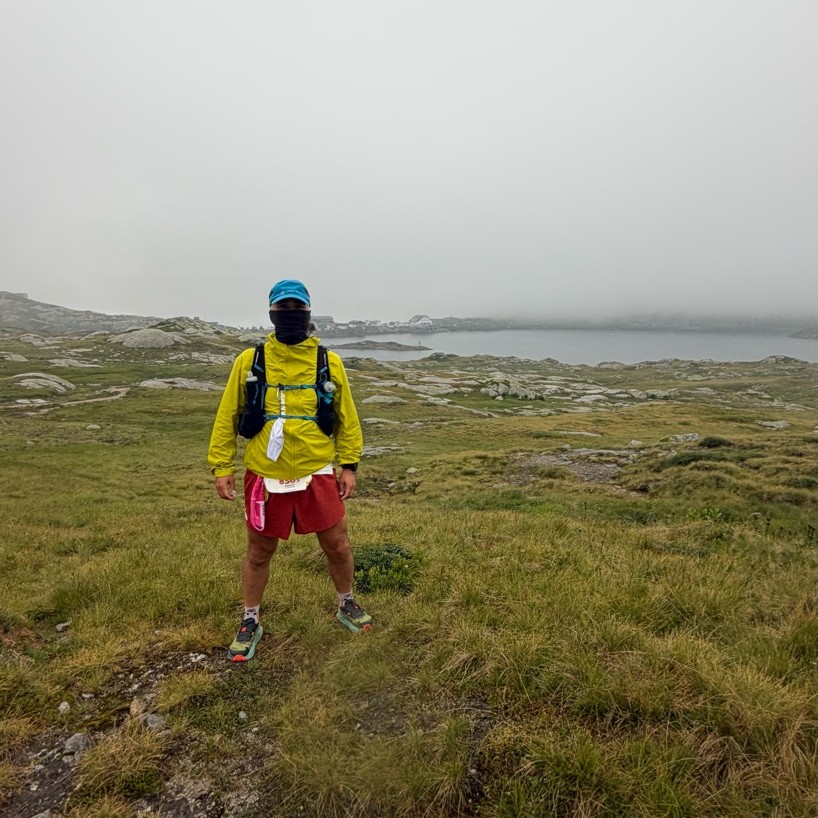
Leaving Guttannen, the math finally favored us: one climb, one descent, 34 kilometers, 1,600 meters of gain. For the first time we talked about the finish itself — a dangerous moment, celebrating before it’s earned.
The air felt heavy and still. Every mountain runner knows that feeling — a storm building. Halfway up the climb we stopped at a small café; within seconds of sitting down, rain intensified into a full alpine storm. A message from Ezgi: “It’s hailing in Grindelwald. Please be careful.” If it was hailing at the finish, I wondered what awaited us higher up.
When it eased, we continued. Dry paths had become streams. My sleep deprivation finally caught up with me — blurred vision, eyelids closing without permission, each blink longer than the last. I wasn’t hallucinating yet, but I was close.
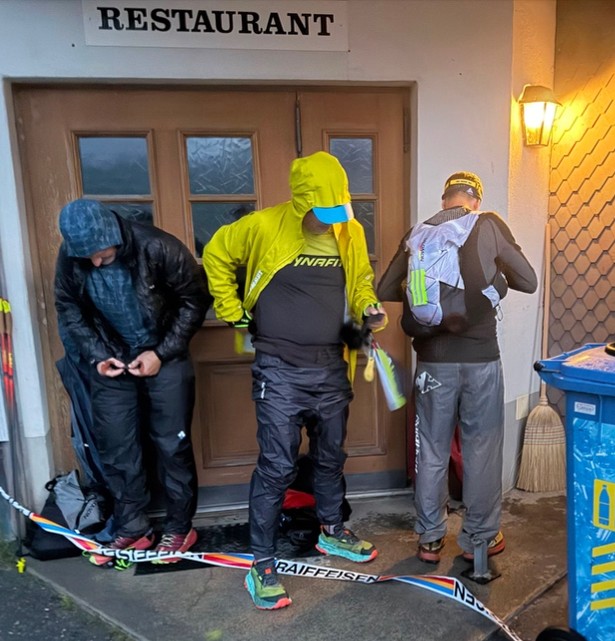
Then came the hail — tiny white pellets hammering jackets and poles, warmth gone in minutes, conversation stopped. Near the highest point we found a building with an extended roof and knocked, asking only for somewhere dry to change. A man opened the door, looked at us, then at the storm, then back at us.
“Closed.”
The door shut. I’ve met thousands of people through trail running, almost all of them extraordinarily kind — volunteers awake through the night, strangers cheering, restaurant owners filling bottles for free. That single closed door didn’t change my opinion of people; if anything it reminded me how exceptional everyone else had been. We changed clothes under the roof anyway. Not comfortable. But enough.
As quickly as it arrived, the storm moved on. Kyle looked toward the valley: “That’s the last climb.” Joey smiled: “Now we just have to get home.”
Home. Grindelwald. Ezgi. Poyraz. Shaun. The Eiger stone. Everything that had carried me this far.
Picture – 8: Hail comes
Part VII — Home
The final descent reminded us that Eiger never gives anything away easily — steep, technical, water-filled trails demanding full respect even after nearly two hundred kilometers. Then the trail softened, gravel became runnable forest path, and Kyle looked back: “We can run from here.” Nobody hesitated. Our legs protested. We ignored them. For the first time in days, we weren’t just moving forward — we were running toward home.
Through the trees, the lights of Grindelwald appeared. Civilization had quietly returned. Nobody said much. We just kept running, thinking the same thing: we’re going to make it.
About five hundred meters before the finish, I saw Ezgi, who’d been tracking the race since the start while looking after Poyraz. We embraced — just a few seconds, the clock still ticking, neither of us caring. I asked about Poyraz. She smiled: “He’s asleep.” Of course he was. One day I’ll tell him this story — not so he knows I finished Eiger, but so he understands that dreams are rarely achieved alone.
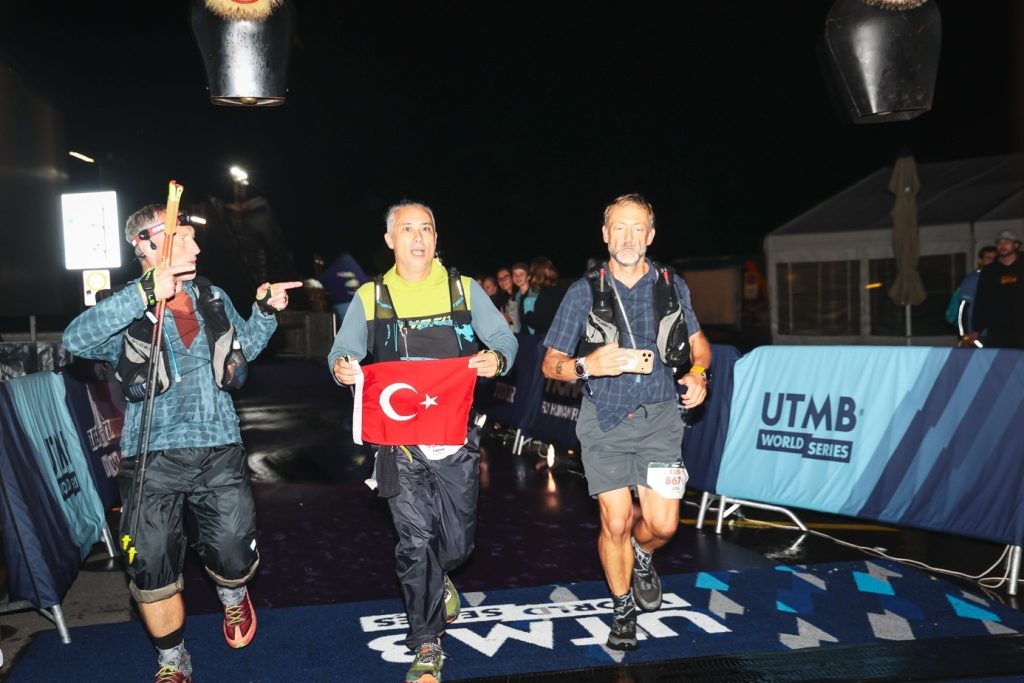
I turned back to Kyle and Joey, and we naturally regrouped. The race had started with one teammate; it would finish with two others. The final stretch disappeared almost effortlessly, volunteers and strangers cheering every finisher with the same enthusiasm.
Then I saw Shaun, standing just beyond the finish arch with three cold beers. Disappointment in his eyes that he hadn’t finished — but something stronger than disappointment. Pride.
We crossed together — Kyle, Joey, and I. Shaun hugged me immediately. “I knew you’d make it.” I looked back at him: “No. We made it.” Because that was the truth — my legs carried me across the line, but Shaun’s belief carried me long before Kyle and Joey became my teammates.
I picked up the Eiger stone. Months earlier, Shaun and I had dreamed of bringing it home together. At Jeizinen I’d promised him I’d bring it home for TurkAus. Now I finally could.
Eiger had tested my fitness, my patience, my decision-making. But above all, it tested my ability to trust people. I arrived believing this race would be about mountains. I left believing it had always been about people. The finish line marked the end of 205 kilometers — and the beginning of friendships I have no doubt will outlast any race result.
The mountain changed the course. The people changed the journey.
Picture – 9: The Eiger Stone
Part VIII — Race Debrief
Crossing the finish line isn’t the end of an ultramarathon — it’s simply the moment the body stops moving. The real race is understood days later, once the soreness fades and the emotions settle. Looking back, I don’t remember my finishing time first. I remember decisions. Races of this length are rarely won by fitness alone; they’re shaped by hundreds of small decisions made under fatigue.
What Worked
• Adaptability. Within twenty-four hours, almost everything changed — course, start, strategy, team. I never wasted energy wishing for the original plan; I focused on solving the problem in front of me. That mindset probably saved my race more than any training session.
• Pacing. My goal was consistency, not speed. I never chased other runners or tried to recover lost time. In races beyond 200 kilometers, consistency almost always beats aggression.
• Teamwork. I started with Shaun and finished with Kyle and Joey. Our roles developed naturally — Kyle led technical descents, Joey managed navigation, I held rhythm and overall strategy. Nobody assigned those responsibilities; they simply emerged. That’s how strong teams operate.
• Nutrition. It worked almost exactly as planned. My stomach stayed stable throughout, and I kept eating even without hunger. Simple aid-station and café food — coffee, sparkling water, pizza, sausages, ice cream — mattered as much psychologically as physically.
What I’d Change
• Sleep. My biggest opportunity for improvement. I accumulated barely ninety minutes across the entire race, and by the final climb my body was forcing my eyes shut while walking. Next time I’ll deliberately sleep more — I’m convinced it would produce a stronger overall performance.
• Foot care. My blisters eventually required treatment in Guttannen. The medical team did an outstanding job, but earlier intervention likely would have prevented unnecessary pain. Small problems rarely become smaller in ultra-running.
• Equipment. Performed almost flawlessly overall. The revised course made some planned items unnecessary, but nothing I carried significantly hurt my race. If I started again tomorrow, I’d change very little.
The Hardest Moment
People usually assume it was the weather, the climbing, or the distance. It wasn’t. The hardest moment happened at Jeizinen — watching Shaun end his race, accepting that TurkAus would continue in a way neither of us had imagined. Everything after that was physical. That moment was emotional, and emotional fatigue weighs more than any backpack.
Final Thoughts
Did I finish the race I traveled to Switzerland for? No — that race disappeared before it even started. Did I finish the race the mountain offered instead? Yes, and I wouldn’t change it.
I traveled to Eiger hoping to conquer one of Europe’s great ultramarathons. Instead, I was reminded that ultra-running has never really been about distance, elevation, or finishing times. It’s about people — the ones who train beside you, the ones who wait for you at home, the volunteers who stand in the rain so strangers can continue their journey, and sometimes the people you meet halfway through a race who quietly become lifelong friends.
If someone asked whether Eiger was a success, my answer would have nothing to do with the result sheet. I kept a promise to Shaun. I found two extraordinary teammates. I returned safely to my family. And I came home with memories that will outlast any finish time.
Race Statistics
| Event | Eiger Ultra Trail E250 |
| Year | 2026 |
| Original Course | 250k / 18,000m+ |
| Revised Course | 205k / 10,645m+ |
| Team Start | TurkAus |
| Team Finish | PalmButt |
| Finish Time | 68h43m |
| Overall Position | 46 |
| Total Sleep | 90 min |
| Highest Elevation | 2,700m |
| Lowest Elevation | 600m |
| Longest Stage | 44k Belalp —> Belwald |
| Weather | Rain, hail, heat, cold |
| Biggest Challenge | Team change at Jeizinen |
| Biggest Lesson | Adaptability is endurance |
Race Profile
sitesinden daha fazla şey keşfedin
Son gönderilerin e-postanıza gönderilmesi için abone olun.